Research offers hope for preventing post-COVID ‘brain fog’ by targeting brain’s blood vessels

https://today.uic.edu/covid-brain-fog-research/

UIC TODAY feature publication March 21, 2024

Among the many confounding symptoms in patients recovering from a COVID-19 infection are memory loss and difficulty learning. Yet little is known about the mechanisms of cognitive impairments like these, commonly called brain fog. 

In a new study, researchers at the University of Illinois Chicago have identified a mechanism that causes neurological problems in mice infected with SARS-CoV-2, the virus behind COVID-19. The researchers also found a treatment that helped prevent these changes. Sarah Lutz, assistant professor of anatomy and cell biology in the College of Medicine, led the research, which was published in the journal Brain.

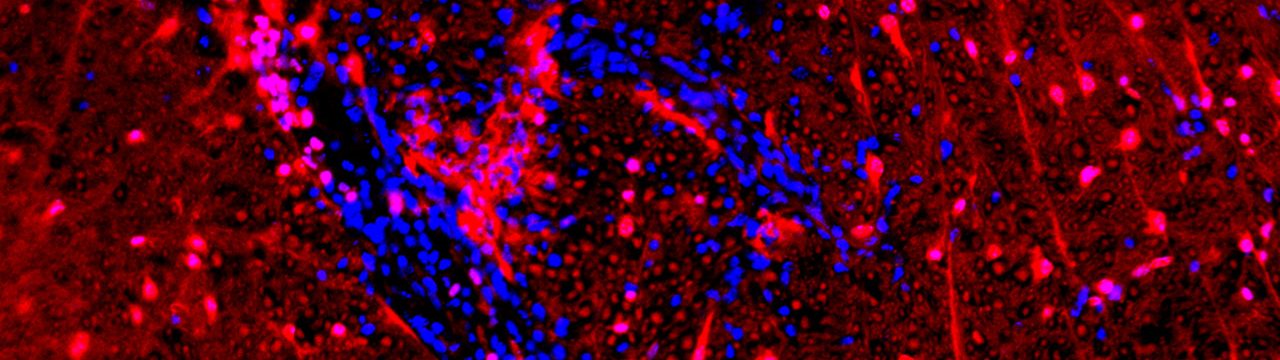
The team focused on the blood-brain barrier, which plays a role in other neurological diseases, such as multiple sclerosis. Normally, this barrier protects the brain from potentially harmful cells or molecules circulating in the bloodstream. But the infected mice, researchers found, had leaky blood-brain barrier vessels and impaired memory or learning.

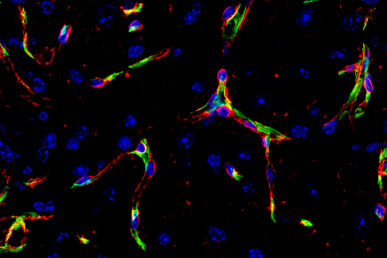
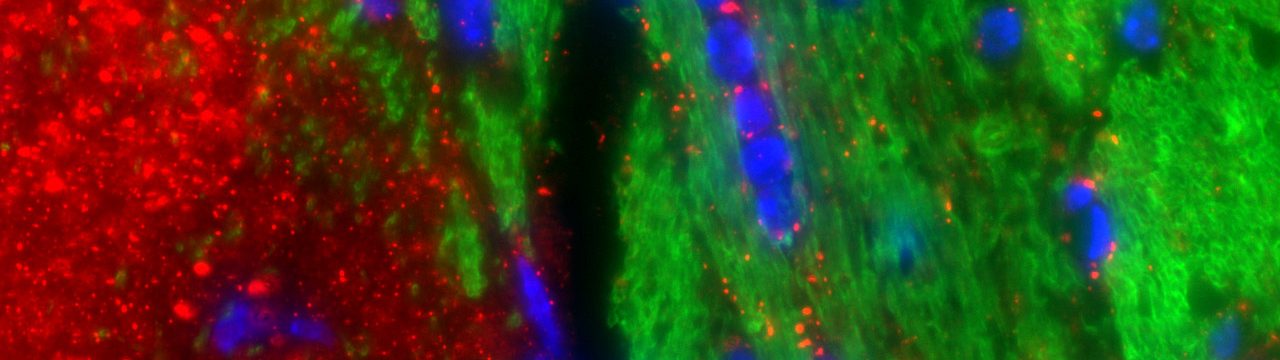
Blood vessel endothelial cells (green) and basement membrane (red) in the brain.
Blood vessel endothelial cells (green) and basement membrane (red) in the brain. (Image: Sarah Lutz)

To understand why, the researchers looked at blood vessels from the brains of infected mice to see which genes were most altered. They found a significant decrease in a signaling pathway called Wnt/beta-catenin, which helps maintain the health of the blood-brain barrier and protects the brain from damage.

With these results, the team explored whether a gene therapy that stimulates the Wnt/beta-catenin pathway could prevent brain damage in mice who were infected with SARS-CoV-2.

Indeed, it did just that.

“They had less blood-brain barrier leakage and less immune cell infiltration of the brain, which led to improvements in learning and memory,” Lutz said. 

Because age is a risk factor for cognitive impairment in humans with COVID-19, the team focused on older mice in their research. They specifically tracked mild infections in the mice. Mild, rather than severe, infections account for most COVID-19 cases in humans today, thanks to the vaccine. Yet even mild infections can cause cognitive impairment, Lutz said.

While the research is a long way from establishing a therapy for humans to prevent post-infection cognitive impairments, this study is an important step on that path, Lutz said. 

“Anytime you can identify a molecular mechanism that contributes to a disease, you’re learning about basic biology and what causes disease in general,” she said. “This research suggests that improving blood-brain barrier integrity could have benefits in preventing complications of COVID-19.” 

One major lesson from the COVID-19 pandemic is that even mild infections can profoundly affect organs, including the brain, explained Dr. Jalees Rehman, the Benjamin Goldberg Professor and head of the UIC Department of Biochemistry and Molecular Genetics and a co-author on the study.  

“There is a need for more research on respiratory infections that can affect the brain,” Rehman said. “The good news is that by studying the molecular signals activated by the infection as well as during the subsequent inflammation when the immune system responds to infection, one can develop new targeted therapies which prevent further damage to the brain and other organs.”

The other UIC authors of the study are Troy Trevino, Avital Fogel, Guliz Otkiran, Seshadri Niladhuri, Mark Sanborn, Jacob Class, Ali Almousawi and Justin Richner. 

Print Friendly, PDF & Email

Welcome Remy-Martins Goncalves

Welcome to our international scholar, Remy Martins-Goncalves, who will be with us 2023-2025.  His PhD thesis addresses thromboinflammation in COVID-19/Long COVID. In the Lutz lab, he will gain expertise in preclinical mouse models of COVID-19/Long COVID neurovascular inflammation and neurological sequelae. 


Congratulations Dr. Trevino

Congratulations to Dr. Troy Trevino for the successful defense of his PhD thesis in the Lutz lab in 2023. Troy is the first author on three publications from his thesis in the Lutz lab. His work helped establish how blood-brain barrier damage contributes to neuroinflammation and cognitive impairment in COVID-19 using a Biosafety Level 3 preclinical animal model with respiratory infection with SARS-CoV-2. After graduation, he joined the lab of Dr. Katerina Akassoglou at the Gladstone Institutes of the University of California San Francisco.

Travel Awards to Troy and KaReisha

Congratulations to Troy and KaReisha for being recognized with Travel Awards to the 2022 Autumn Immunology Conference sponsored by the National Multiple Sclerosis Society and the John Wallace Diversity Award, respectively!
New award-winning lab member!

Welcome Ali Almousawi, our newest lab member. Ali is an undergraduate major in Neuroscience with a minor in Life Science Visualization, with future plans to study neuroimmunology in graduate school. Ali has been selected for the Chancellor’s Undergraduate Research Award.

Congratulations Troy

Congratulations to Troy Trevino for being awarded a T32 Predoctoral Fellowship in the Vascular Biology, Signaling and Therapeutics (VBST) training program (T32 HL144459).

Troy was also selected for a platform presentation at the Cold Spring Harbor Labs Brain Barriers meeting (April 2021).

Undergraduate Fellowship Award!

Congratulations to Quinton Crisman for receiving a prestigious LASURI Undergraduate Research Initiative fellowship! This fellowship will fund Quinton for lab research in both semesters of the 2021-2022 academic year and allow him to present his work at a conference.  Quinton’s project is “Neurovascular inflammation in a novel mouse model of COVID-19”.

Invited seminars

Dr. Lutz is invited to present her laboratory’s research at University of California San Diego as a CCTS Visiting Scholar (Spring 2021), at Rush University Department of Microbiology (Spring 2021), and special seminars at UIC Microbiology & Immunology (Fall 2020) and Grand Rounds for UIC Neurology (January 2021, zoom link TBA)